

One of the most common questions asked by business owners is:
Whilst the question appears simple, the answer rarely is.
Owner-managed businesses have several methods available for extracting value from their companies, including salaries, dividends, pension contributions, bonuses, benefits in kind and, in certain circumstances, Director's Loan Accounts. Each method carries different tax, legal and commercial implications.
The most appropriate strategy will depend on a range of factors, including the profitability of the business, the owner's personal circumstances, retirement plans, succession objectives and future exit strategy.
Given the frequency with which this question arises, we have decided to produce a weekly series on Profit Extraction for Owner-Managed Businesses.
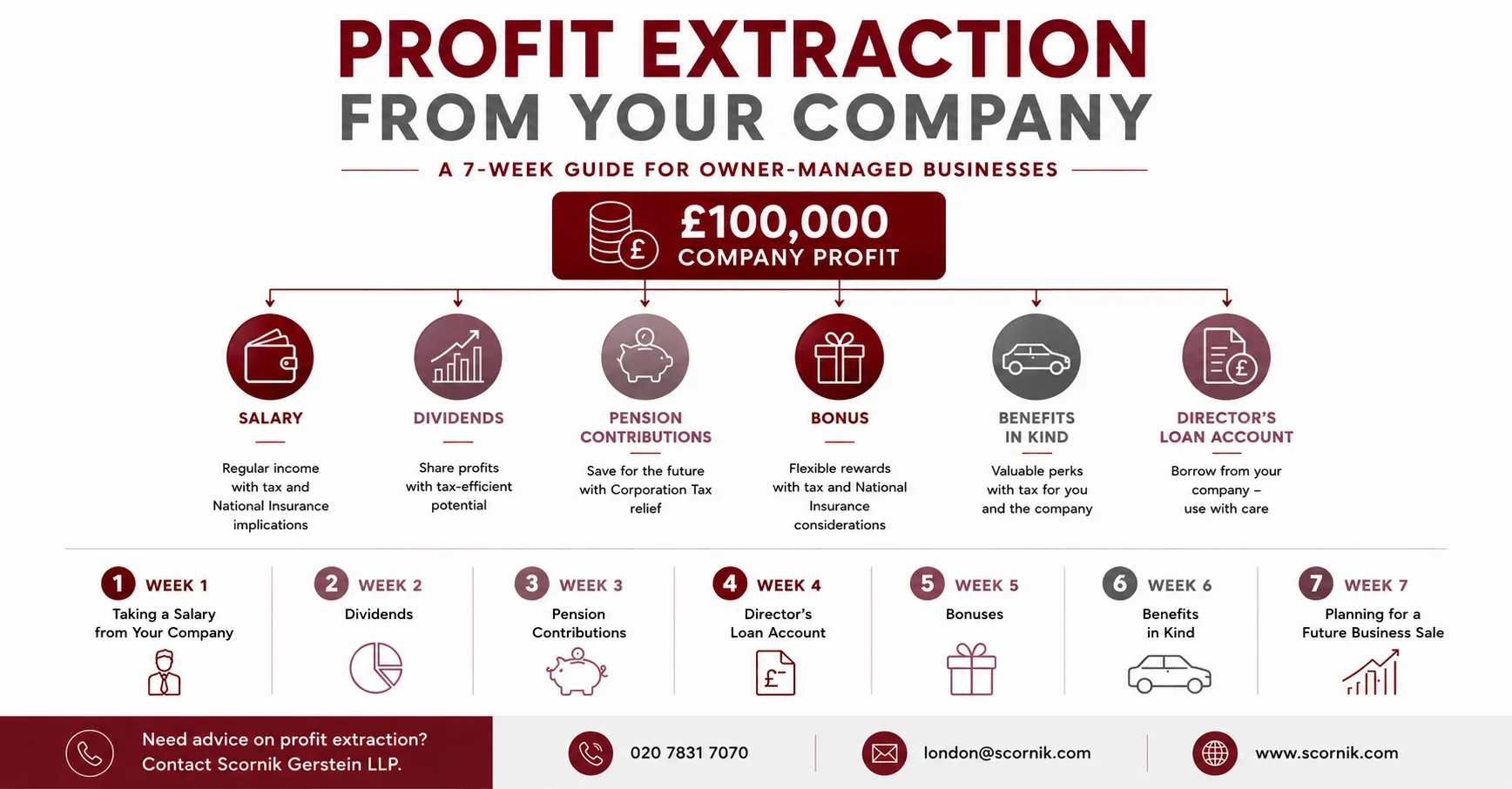
Over the coming weeks, we will explore the principal profit extraction methods available to company owners, examining the advantages, disadvantages and key tax considerations associated with each approach.
We will examine:
We will explore:
We will consider:
This article will cover:
We will explore:
This article will examine:
In the final article of the series, we will examine:
Profit extraction is rarely about choosing a single method. In practice, the most effective strategies often involve a carefully planned combination of salary, dividends, pension contributions and long-term succession or exit planning.
A strategy that works well for one business owner may be entirely unsuitable for another. Professional advice can help ensure that profits are extracted in a tax-efficient manner whilst remaining compliant with HMRC requirements and aligned with wider commercial and personal objectives.
If you would like advice on the most tax-efficient way to extract profits from your company, or would like to discuss your current remuneration strategy, please feel free to contact us at london@scornik.com.
Next week, we will begin the series by looking at one of the most common methods of profit extraction: taking a salary from your company.